Most Brooklyn fire escape violations are cured through repair or restoration, not replacement. We tell you which one before you commit to either.
Our crew handles fire escape repair across Brooklyn, brownstones in Park Slope, walk-ups in Red Hook, and everything in between.
Reach us early in the day and we’ll often have someone at your building before the afternoon’s out.
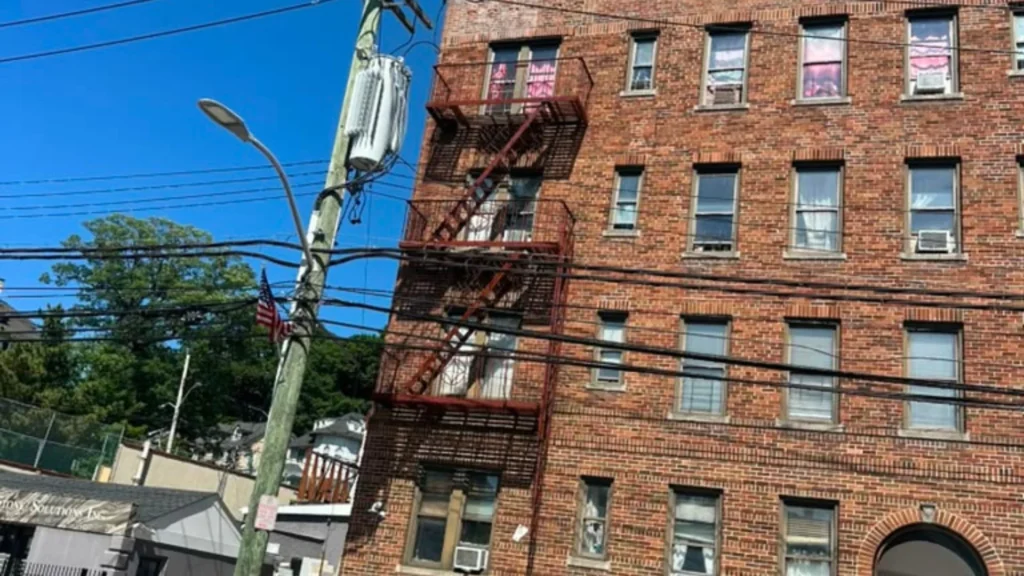
Any one of these means it’s time for an assessment, not a wait and see approach:
Repair fixes one broken part. Restoration rebuilds the whole structure.
Targeted repair fixes isolated structural failures, a cracked weld joint, a broken step, a loose railing post, a failed drop ladder hinge. The rest of the fire escape holds up fine. Repair is focused, fast, and lower cost than a full rebuild.
Fire escape restoration covers a structurally sound fire escape that’s deteriorated across the board. It starts with full rust removal down to bare metal (sandblasting or mechanical grinding), moves through repair of every minor structural deficiency we find, then applies rust-inhibitive primer and a full two-coat industrial topcoat. The structure holds up. It just needs a complete overhaul instead of a patch job.
Feature | Repair | Restoration | Installation |
Primary Need | Isolated fixes | Broad overhaul | Full replacement |
Scope of Work | One or two specific failures | Widespread corrosion | Beyond repair |
Typical Violation | Single-point citation | General deterioration | Replacement order |
Maintenance | Recent paint history | No service in 10+ years | Condemned structure |
Not sure which one your building needs? Call 1 (347) 378-9376. We’ll tell you straight, repair or restoration, before you commit to either
We diagnose on site before we quote. You get a fix for what’s actually wrong, not a guess.
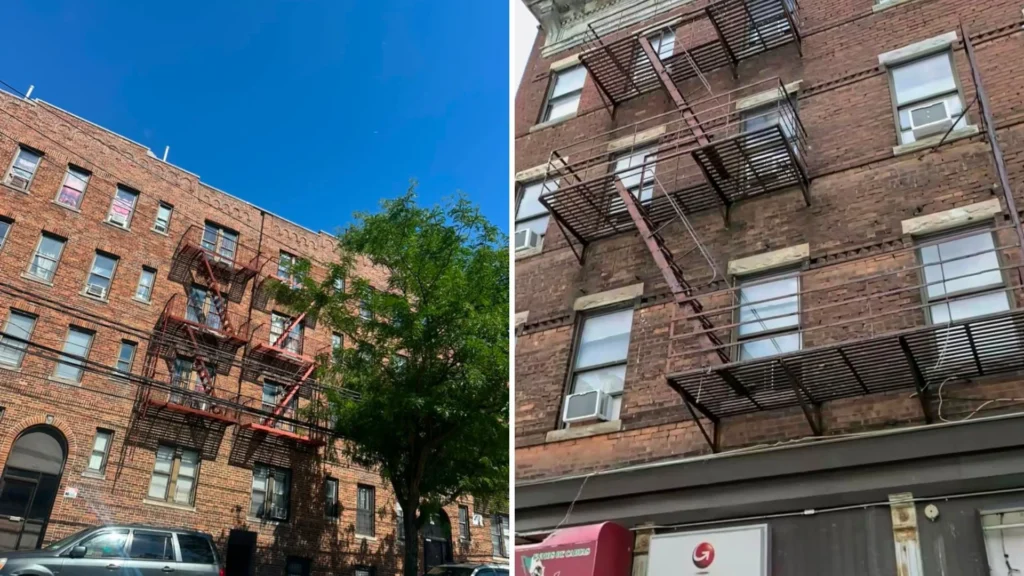
We follow the same sequence whether your fire escape is on a Park Slope brownstone or a Red Hook walk-up.
We check every weld, anchor, platform, step, railing, and piece of hardware against DOB structural standards, then hand you a written condition report before any work starts.
Moderate corrosion gets mechanical grinding and wire brushing. Severe corrosion or large surface areas get sandblasting. Either way, we strip all loose scale, flaking paint, and rust down to bare metal, meeting SSPC SP-6 (commercial blast) or SP-10 (near-white blast) depending on surface condition.
We fix every deficiency the assessment found before any surface treatment begins. Our welders work to AWS D1.1 standards and hold OSHA certification.
We apply a zinc-rich or alkyd-based anti-corrosion primer to all bare metal at a minimum 2-mil dry film thickness, with a second coat in severely corroded areas.
We apply two coats of oil-based, industrial-grade, fire-retardant paint in contrasting colors, NYC Administrative Code has required fire retardant coating on fire escapes since 1929. Our crew verifies full coverage before final inspection.
We hand you complete cure documentation for any related DOB violations, before/after photographs, and a maintenance record for your building files.
Same city, different damage. What we see depends on your building’s location.
Pre-war brownstones (Park Slope, Carroll Gardens, Bed-Stuy, Brooklyn Heights):
These are our most common restoration candidates. Fire escapes in 1890 to 1940 brownstones often run 60 to 100 years old. Original wrought iron (pre-1920) needs specialist repair techniques; mild steel (post-1920) responds better to standard repair techniques but wears down just as badly after a century of weather.
Coastal walk-ups (Coney Island, Red Hook, Bay Ridge):
Salt air corrodes metal two to three times faster than inland Brooklyn. These buildings consistently show the most deteriorated fire escapes we see, and full restoration is the standard fix here, not routine painting.
Coastal structures need a full restoration cycle every 5 to 7 years; inland buildings usually stretch to 8 to 10. On average, we see 30 to 40% more surface corrosion on coastal fire escapes at the 5 year mark compared to inland buildings of the same age.
Converted loft buildings (DUMBO, Greenpoint, Williamsburg):
Industrial-to-residential conversions often carry heavy-gauge steel fire escapes with severe industrial-era corrosion. Sandblasting is almost always required, and both primer and topcoat specs run heavier than standard residential jobs.
Serving all Brooklyn neighborhoods, from pre-war brownstones in Park Slope and Carroll Gardens to coastal walk-ups in Red Hook and converted lofts in DUMBO and Williamsburg.
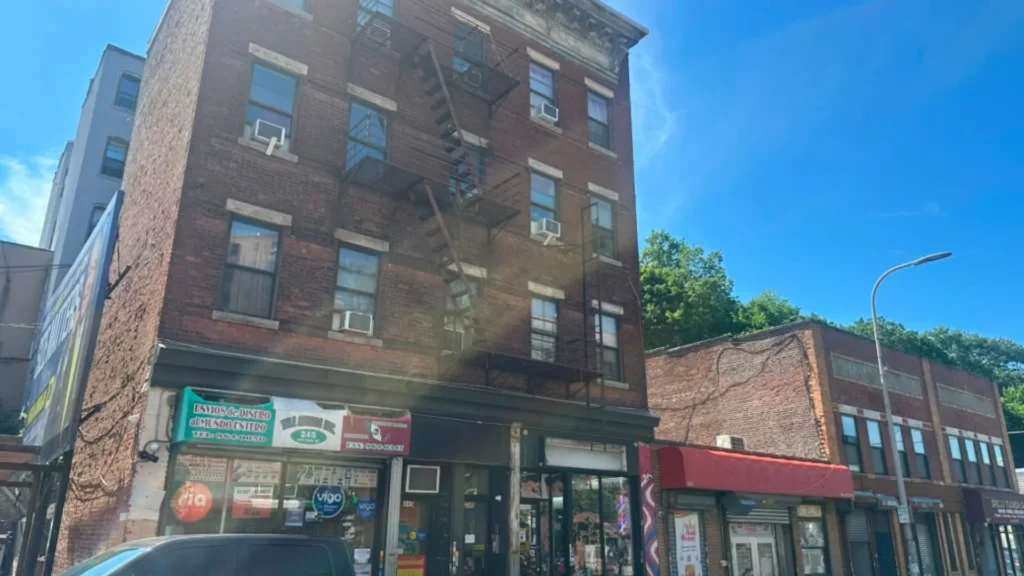
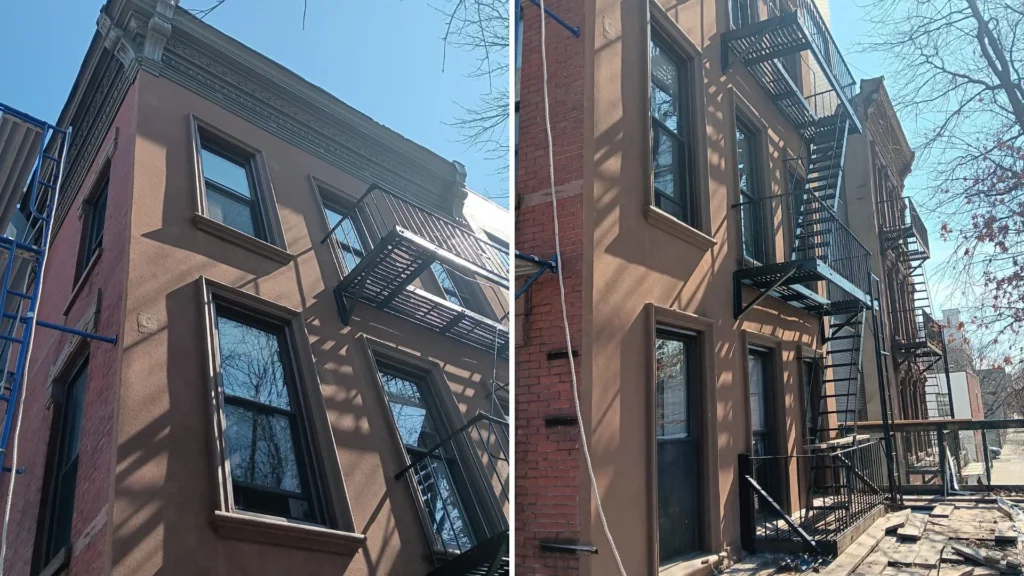
Most DOB fire escape violations get cured through repair or restoration, not full replacement. Paint and surface violations, minor structural deficiency notices, and general maintenance violations all fall into this category.
Under the NYC Multiple Dwelling Law, the responsibility to fix these issues sits with the landlord, not the tenant. Once we assess your fire escape, we tell you exactly what level of work, repair or full restoration, will cure the violation, then provide the written repair record, photographs, and certification statement DOB requires to close it out.
Already holding a violation notice? Call us before doing anything else. We’ll walk you through what DOB actually needs and file accordingly. For the complete process, read our guide on clearing a DOB fire escape violation in Brooklyn.
Get a free repair and restoration assessment. Call 1 (347) 378-9376 or fill out the form below.
Repair fixes specific broken components on an otherwise sound structure. Restoration rebuilds a fire escape that's deteriorated broadly, full rust removal, structural repairs, primer, and topcoat.
If you're looking at one or two isolated problems, repair usually covers it. If corrosion or damage shows up in multiple places, or the fire escape hasn't been serviced in 10 or more years, restoration is the right call. We'll confirm during a free assessment.
Most repair and restoration work does not require a new DOB permit since it doesn't alter the structure's design or load path. Structural modifications, replacement, or new installation do require permits and filings. We confirm what your specific job needs during the assessment and handle any required filing.
Yes, in most cases. Paint, surface, and minor structural violations are cured through repair or restoration rather than replacement. We provide the documentation DOB requires to close the violation.
Cost depends on how many components need work and how severe the damage is. Tell us your building's condition and we'll give you a firm number after a free assessment. Brooklyn buildings are too different from each other for a flat rate to mean anything. We examine the structure with you, then give you a firm quote before anything gets touched.
Yes. Every job comes with a written condition report, before/after photographs, and a certification statement ready for DOB filing.
A few days for straightforward jobs. Up to two weeks if there's heavy corrosion or structural work involved. We'll know which one yours is after the assessment.
All the time. Park Slope, Carroll Gardens, Brooklyn Heights, wherever the pre-1920 buildings are, that's where we're doing this work most. Wrought iron is different from steel, it needs hand wire brushing instead of mechanical grinding so we don't damage the grain. Our crew knows the difference and treats each one accordingly.
We provide expert rust-proofing, painting, and violation clearance across all 29 Brooklyn neighborhoods. We keep your historic brownstones and commercial properties compliant and safe.
Copyright © 2026, All rights reserved.